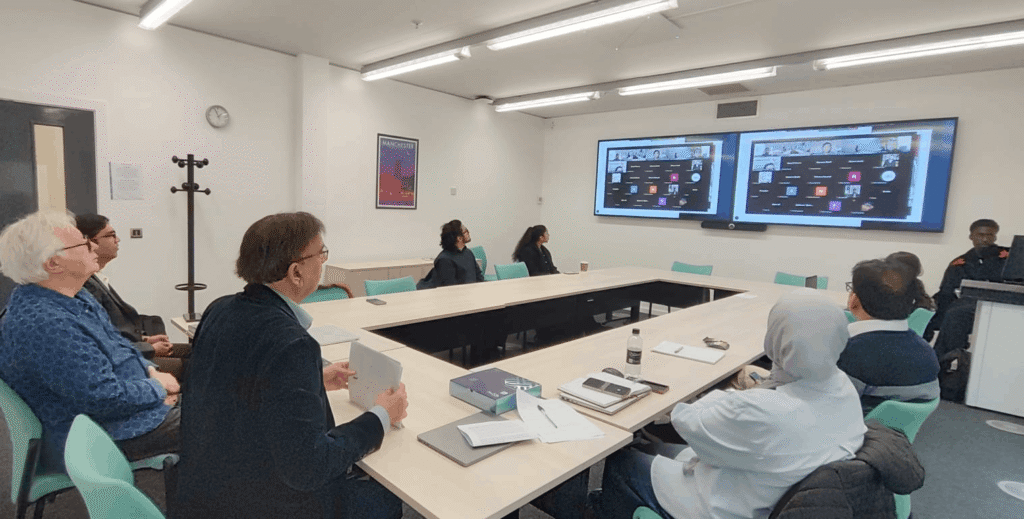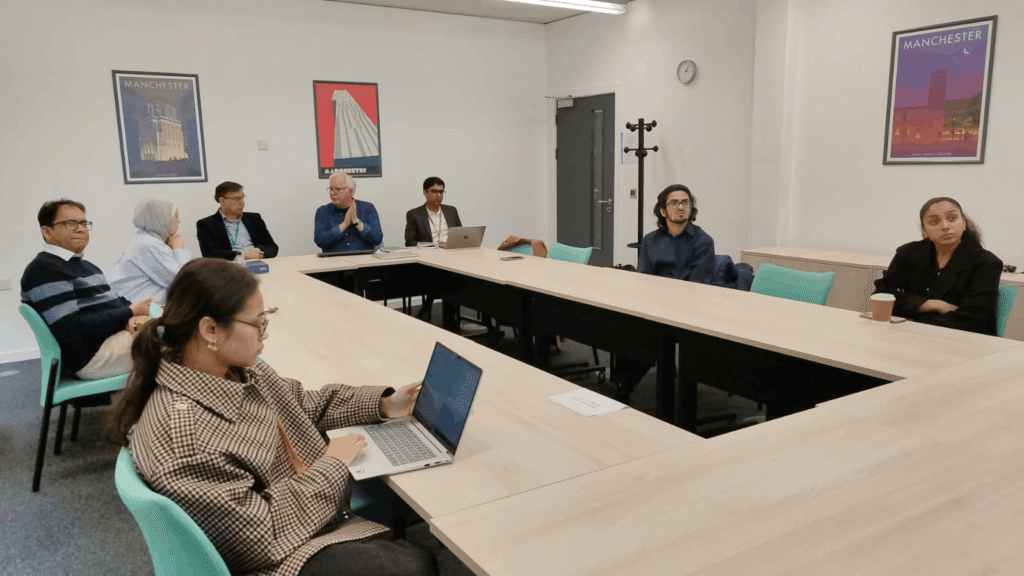
The GMHCP Journal Club hosted an engaging session on 11 June 2026 at the Jean McFarlane Building, The University of Manchester, with participants joining both in person and online.
The session was presented by Professor Gerard (Gerry) Leavey, Director of the Bamford Centre at Ulster University, Deputy Director of ADR-NI, and Co-Lead of the NI Clinical Research Network – Mental Health. An internationally recognised social worker and researcher, Professor Leavey has made significant contributions to advancing understanding of mental health inequalities and improving access to care for minority ethnic, migrant, and disadvantaged communities.
His presentation, “Ethnicity and Mental Illness,” provided an insightful exploration of the complex relationships between migration, ethnicity, discrimination, and mental health, with a particular focus on refugee and migrant populations.
Session Summary
Drawing on decades of research, Professor Leavey discussed how the mental health of refugees and migrants is shaped not only by experiences before migration but also by the social environments they encounter after resettlement. While many refugees experience significant trauma and adversity prior to migration, post-migration challenges—including discrimination, social isolation, socioeconomic disadvantage, housing insecurity, and barriers to integration—can have a profound and lasting impact on psychological wellbeing.
The presentation highlighted findings from two important studies. A German study demonstrated that perceived discrimination was strongly associated with poorer mental health outcomes and increased psychological distress among refugees. A large population-based study from Denmark found that refugees living in neighbourhoods with fewer people from similar cultural or national backgrounds faced a higher risk of post-traumatic stress disorder (PTSD) and non-affective psychosis. These findings underscore the protective role of culturally familiar communities, social support, and a strong sense of belonging.
Overall, the session emphasised the critical influence of post-migration social environments on refugee mental health and reinforced the importance of fostering inclusive communities, reducing discrimination, and strengthening social connectedness to support long-term psychological wellbeing.
We extend our sincere thanks to Professor Gerard (Gerry) Leavey for sharing his expertise, research, and valuable insights. His presentation offered a thought-provoking perspective on the social determinants of mental health and generated an engaging discussion among participants.
We also thank everyone who joined us, both in person and online, for their active participation and contributions, which helped make the session a great success.