Status: Current projects
Location: Pakistan
Division: Anxiety/OCD/Trauma
Themes:
- Psychological Medicine & Clinical Trials
- Multimorbidity & Physical Mental Health Interface
- Implementation Science & Health Systems
Summary: A multidisciplinary program in Pakistan (CHINAR) transforming burns care by creating a national registry, integrating co-designed psychosocial support, training staff, and raising prevention awareness.
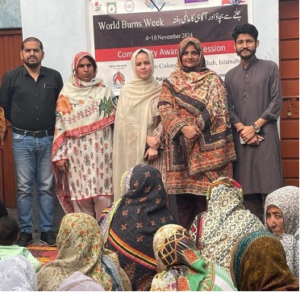
Description: The Problem: Burns cause around 11 million injuries globally each year, with 90% occurring in LMICs like Pakistan. One in three hospitalised burn patients in these settings die within three weeks, and survivors face severe lifelong physical, emotional, and social challenges. Existing prevention and treatment services in Pakistan are inadequate.
The Intervention: This multidisciplinary program (CHINAR – Culturally Adapted Rehabilitation) aims to transform burns management, treatment, and prevention in Pakistan. Key features include:
- Creating a national burns registry to understand the full scale and nature of the problem.
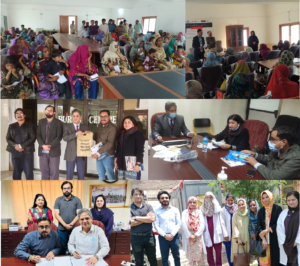
- Working closely with survivors and families through workshops (supported by a PPDA award) to co-design culturally appropriate psychosocial support interventions.
- Training healthcare staff in both physical and psychological rehabilitation techniques for burn injuries.
- Using social media and community outreach to raise awareness about burn prevention and first aid.
- Linking with policymakers and hospitals across all provinces to ensure systemic integration.
Our Impact: This research aims to create an affordable, scalable, and evidence-based model that integrates mental health support as a standard part of burns rehabilitation in Pakistan. The goal is to significantly improve both the psychological and physical recovery outcomes for survivors of burn trauma, while also working to reduce the incidence of burns through prevention campaigns.
Key Publications:
- Culturally adapted psychological interventions for burn survivors in low- and middle-income countries: A systematic review (Link: https://doi.org/10.1016/j.burns.2023.06.014)