Research
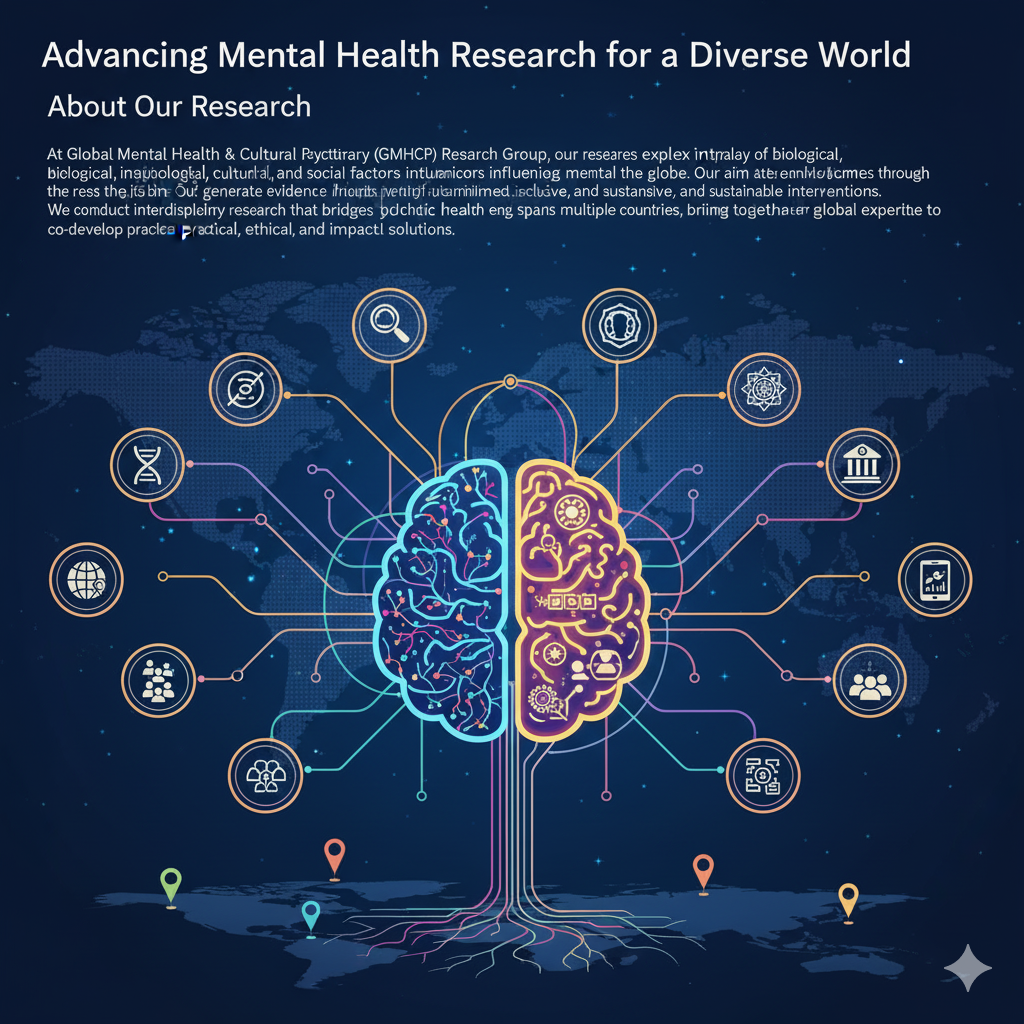
Advancing Mental Health Research for a Diverse World.
About Our Research
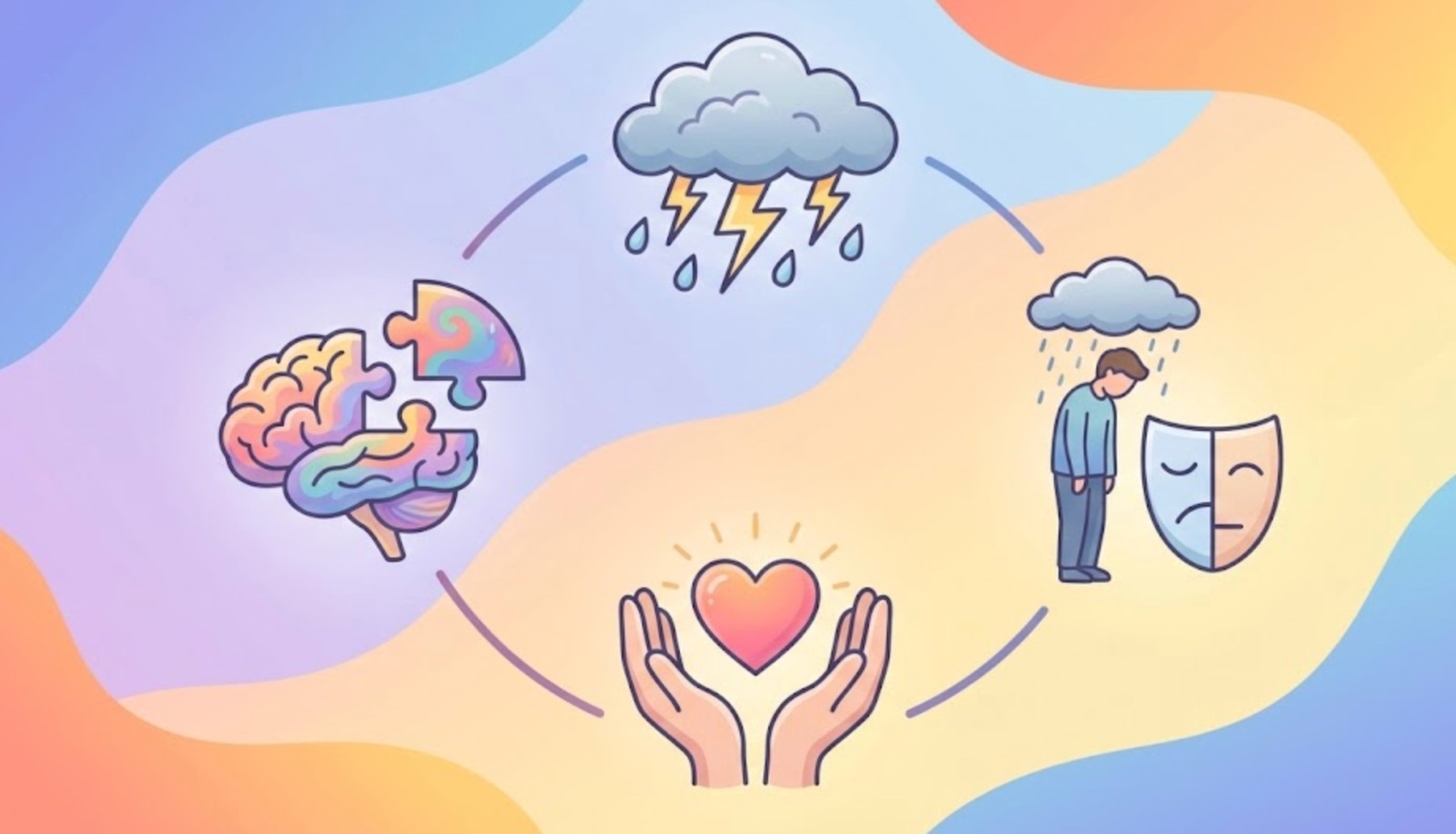
At the Global Mental Health & Cultural Psychiatry (GMHCP) Research Group, our research explores the complex interplay of biological, psychological, cultural, and social factors influencing mental health across the globe. Our aim is to generate evidence that improves mental-health outcomes through culturally informed, inclusive, and sustainable interventions. We conduct interdisciplinary research that bridges clinical psychiatry, public health, and community engagement. Our work spans multiple countries, bringing together global expertise to co-develop practical, ethical, and impactful solutions.
Research Divisions
To address the diversity of mental health challenges, GMHCP’s research is structured into nine specialised divisions. Each division focuses on a distinct area, fostering depth, expertise, and collaboration while contributing to our collective mission of advancing global mental health.


02
Division of At-Risk Mental State (ARMS), Schizophrenia Spectrum and Other Psychosis Disorder





Research Themes















Evidence Synthesis
From Complexity to Clarity: The Foundation of Evidence-Based Action
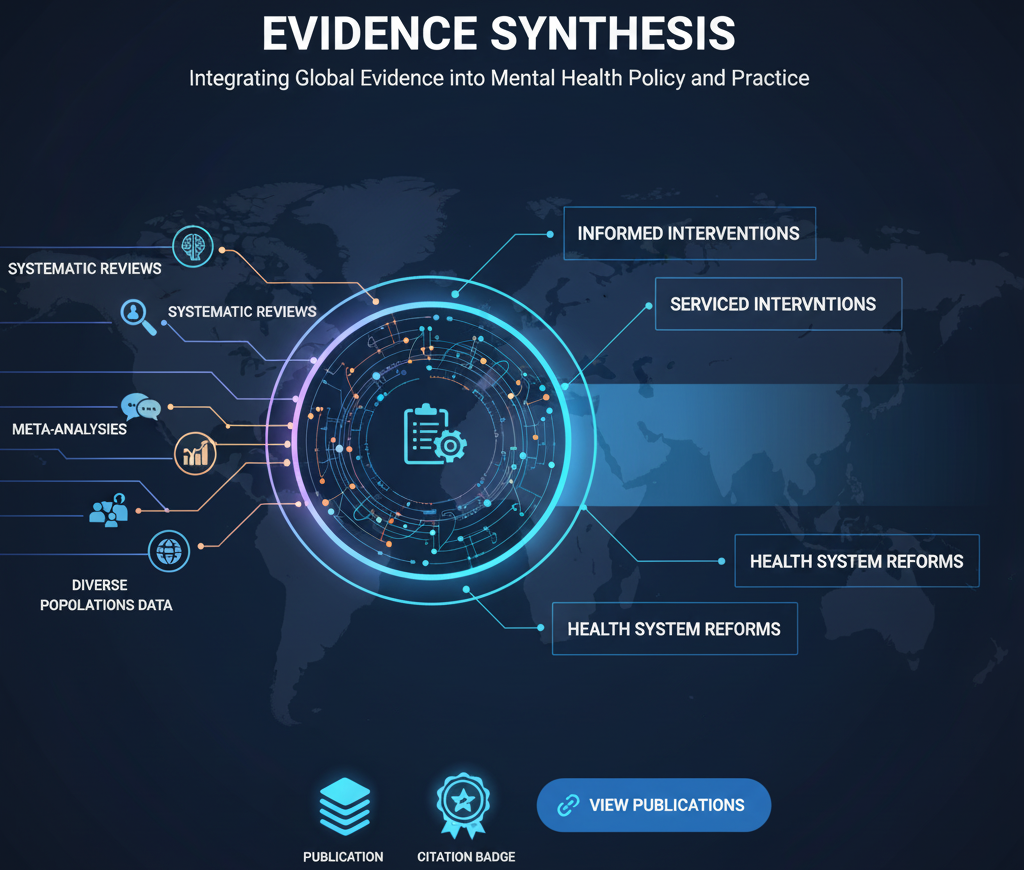
In the vast and ever-growing sea of global health research, finding a clear direction can be impossible. The GMHCP Evidence Synthesis Centre is our answer to this challenge. We are a dedicated unit that provides the methodological backbone for our entire organization, using rigorous, transparent, and powerful techniques to distill the world’s collective research into clear, trustworthy, and actionable evidence. Our mission is to transform complexity into clarity, ensuring that every decision from clinical practice to national policy is guided by the best available science.
The Challenge: The "Evidence-to-Practice" Gap
The path from a research discovery to a real-world health improvement is long and full of obstacles. Our Centre is designed to overcome the key barriers that slow down progress:
- Information Overload:With millions of new studies published annually, it’s impossible for any single clinician or policymaker to keep up.
- Conflicting Results:Individual studies often produce conflicting findings, leading to confusion and inaction.
- The 17-Year Gap:It takes an average of 17 years for a research finding to be adopted into routine practice, a delay that costs lives and resources.
Our Approach: A Rigorous and Transparent Process
Our team of experts uses a suite of powerful methods to synthesize evidence. This systematic approach ensures our findings are balanced, comprehensive, and free from bias. Our core methods include:
- Systematic Reviews:We conduct exhaustive searches for every piece of research on a specific topic. We then appraise each study for quality, selecting only the most robust evidence to include in our analysis.
- Meta-Analysis:When appropriate, we use advanced statistical techniques to combine the numerical results from multiple high-quality studies. This provides a single, powerful estimate of a treatment’s true effect, with much greater precision than any individual study.
- Qualitative Synthesis:We also synthesize qualitative research to understand the lived experiences of patients and the contextual factors that influence how an intervention works in the real world.
Featured Work: High-Impact Reviews
Our Evidence Synthesis Centre, including senior leaders like Professor Nusrat Husain, Dr. Nasim Chaudhry, and Dr. Imran Chaudhry, has produced a number of high-impact reviews that are shaping global practice. Key examples include:
- Self-Harm in South Asian Communities:In partnership with PILL, our team, including Tayyeba Kiran and Dr. Sehrish Irshad, conducted a meta-synthesis of qualitative evidence on self-harm and suicidal behaviours in South Asian communities. This work created a rich, nuanced understanding of the cultural factors driving self-harm, providing essential guidance for prevention strategies.
- Effectiveness of Digital Interventions:Our researchers have led systematic reviews evaluating the effectiveness of digital health interventions for psychosis. This work is critical for guiding the development of new technologies and helping health systems identify which tools are genuinely effective.
- Psychological Therapies in Global Contexts:We have synthesized the evidence on the effectiveness of psychological therapies, like CBT, when adapted for different cultural contexts, such as the Middle East. This ensures that interventions are not just evidence-based, but also culturally competent.
Our Impact: Driving Evidence-Based Change
Our work provides clear, trustworthy evidence that is essential for progress.
- Guiding Clinical Practice:We provide clinicians with clear, up-to-date guidelines on the most effective treatments for their patients.
- Informing National & Global Policy:We deliver the robust evidence that policymakers at organisations like the WHO and national ministries of health need to make smart, informed decisions.
- Directing Future Research:Our work identifies critical gaps in the evidence, ensuring that future research funding is directed towards the most important unanswered questions.
Collaborate With Us
The GMHCP Evidence Synthesis Centre provides methodological expertise across our global network and welcomes new partnerships. We collaborate with academic institutions, NGOs, and international bodies like Cochrane to produce high-impact reviews that answer the most pressing questions in global mental health.
- Contact: info@gmhcp.co.uk
Research Ethics & Governance
At the Global Mental Health and Cultural Psychiatry Group, we are committed to upholding the highest academic and ethical standards across all our research endeavours. Ethical integrity is not just a guiding principle: it is the foundation of everything we do.
We embed ethical considerations into every stage of our work, ensuring our studies reflect scientific rigour and cultural sensitivity. Our team prioritises ongoing learning, with researchers receiving regular training in Good Clinical Practice (GCP) delivered by leading experts from around the world. This keeps us aligned with the latest global guidelines and evolving ethical best practices.
By strengthening our ethical framework, we aim to set an example in the international research community – advancing knowledge while safeguarding participants’ wellbeing and respecting the diverse cultural contexts in which we operate.
The Global Ethics Learning Hub (GELH) aims to oversee and provide guidance on the ethical conduct of all relevant research activities within our partner organisations and uphold guiding principles of ethical integrity and good governance. GELH aims to facilitate sound decision making that respects the values and interests of the group and society at large. We continue to expand our research, strengthen our partnerships, and explore new avenues for ethical discourse. Through blogs, publications, and collaborative initiatives, we strive to create a world where ethical considerations are at the forefront of decision-making processes.
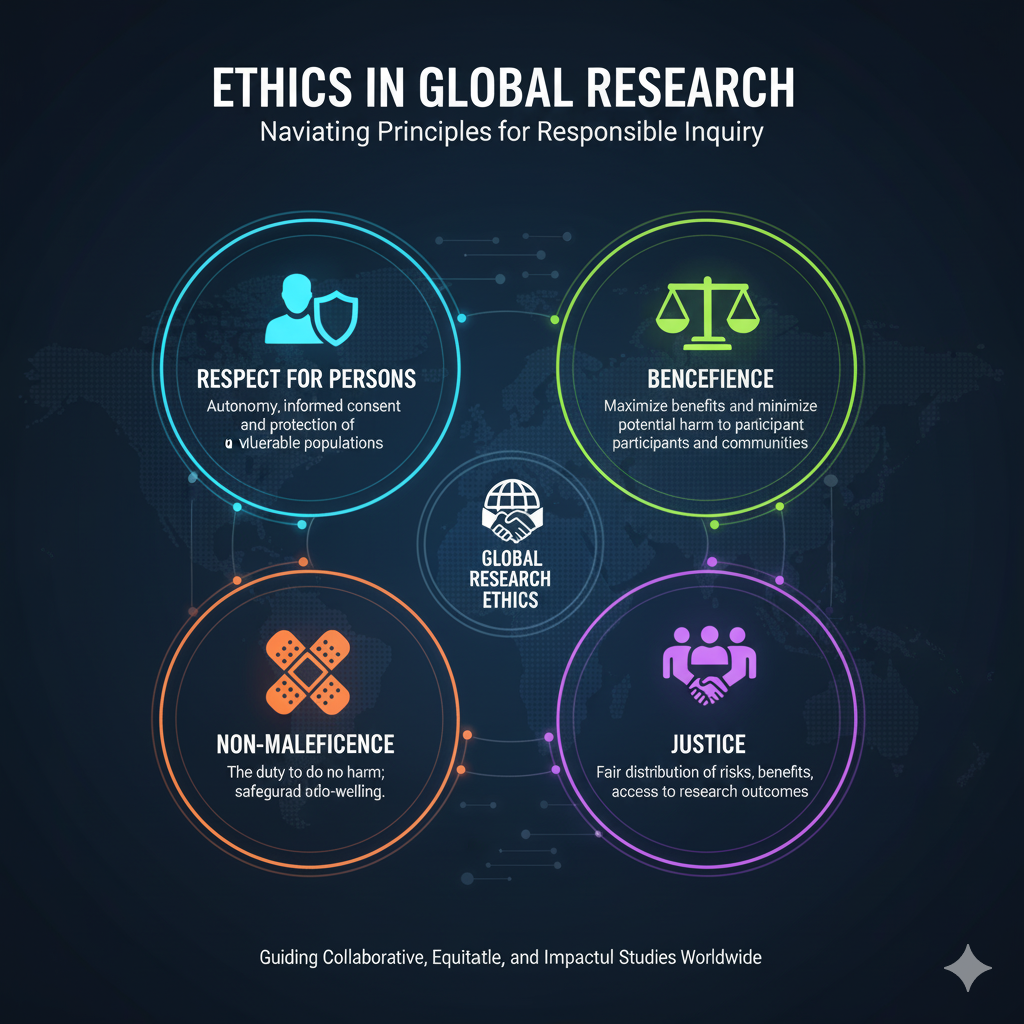
The Four Pillars of Bioethics
- Autonomy: An individual’s right to make decisions about their own healthcare and body. It emphasises respecting their choice and promoting independence.
- Beneficence: Promoting wellbeing and preventing harm for patients. It requires healthcare professionals to act in their patients’ best interests.
- Nonmaleficence: The obligation to do no harm. It requires avoiding or minimising harm to patients and preventing any potential risks associated with medical interventions or research.
- Justice: Fairness and ensuring equal access to healthcare resources and distribution of benefits. It entails treating all individuals equitably and without discrimination.
These principles serve as a guide for healthcare professionals, researchers and policymakers, when faced with ethical dilemmas.
Publications
Memon, R., Asif, M., Shah, B. A., Kiran, T., Khoso, A. B., Tofique, S., … & Edwards, S. J. (2024). Clinicians’ experiences of obtaining informed consent for research and treatment: a nested qualitative study from Pakistan. BMC Medical Ethics, 25(1), 131.
Memon, R., Asif, M., Pitman, A. et al. Is equipoise a useful concept to justify randomised controlled trials in the cultural context of Pakistan? A survey of clinicians in relation to a trial of talking therapy for young people who self-harm. Trials 24, 506 (2023). https://trialsjournal.biomedcentral.com/articles/10.1186/s13063-023-07397-8
Memon, R., Asif, M., Khoso, A. B., Tofique, S., Kiran, T., Chaudhry, N., … Edwards, S. J. (2021). Recognising Values and Engaging Communities Across Cultures: Towards Developing a Cultural Protocol for Researchers. BMC Medical Ethics, 22(1), 1-8. https://bmcmedethics.biomedcentral.com/articles/10.1186/s12910-021-00608-4
Dissemination
Recognising values and engaging communities across cultures: Building a robust foundation for global mental health
Senior Research Scientist PILL, and Director Manchester Global Foundation, Dr Rakhshi Memon delivered a talk at the Learning Through Play Plus (LTP Plus) Symposium on Aug 14th at the Centre for Addiction and Mental Health (CAMH) in Toronto, Canada. She addressed diversity across cultural values and how embracing differences can support research of high ethical standards. She emphasised that while promoting collaborative research, it is essential to bridge the gap to understand beliefs, norms, and values of local communities specifically in LMICs. Dr Memon remarked that we must ensure researchers are better equipped to engage with communities to facilitate research practices deeply rooted in strong ethical codes of conduct. She also talked about our established groups, Global Ethics Learning Hub (GELH) and Community Engagement and Involvement Group (CEIG). These groups aim to set up an infrastructure of ethical good practice and participatory approaches which are harmonious and responsive to the cultural norms of Pakistan, and serves as a vehicle of cascading learning internally within the organisation and externally in Pakistan with an long-term goal of global dissemination.
The 2024 RCPsych International Congress
The 2024 RCPsych International Congress, the College’s flagship annual event, was held from 17th to 20th June, 2024 in Edinburgh. It featured keynote presentations from world-renowned international speakers, opinion leaders, and individuals with lived experience. Dr Rakhshi Memon’s work was featured at the e-Poster hub, which showcased hundreds of digital poster presentations. Dr Memon presented a poster on “Ethical Concerns of Research Ethics Committees in Suicide Research: A Qualitative Study from Pakistan.”
Bioethics Summer Program
Pakistan Institute of Living and Learning (PILL) hosted a Bioethics Summer Program from August 5th-9th, 2024, at Shifa Tameer-e-Millat University, Islamabad, organised in collaboration with Shifa College of Medicine, Tameer-e-Millat University; Interdisciplinary Center for Bioethics, Yale University; Manchester Global Foundation; University College London; and University of Manchester. This initiative aims to enhance understanding and application of bioethical principles in contemporary healthcare and research. The program featured a global faculty comprising world-leading experts in bioethics from North America, Europe, and South Asia.
Our Activities/Workshops & Events
ToC on “Development and Feasibility of a Culturally Adapted Psychosocial Intervention to Improve the Well-being of Black, Asian and Minority Ethnic Women During the Perinatal Period”
MGF hosted an in-person Theory of Change (ToC) workshop at Aldgate Tower, Aldgate East London on 7th June, 2024. The workshop was conducted by Dr. Rakhshi Memon to inform a maternal well-being programme for British, Black, Asian, and Minority Ethnic Women. Dr. Deepali Sharma set the stage by introducing the key elements of the ROSHNI-3 intervention. The participants represented various organisations including Ethnic Health Forum, Maternity Mates, and Save the Children. Among the participants, there were perinatal health experts, social prescribers, research managers, programme coordinators, participatory research commissioners, research operations managers, and two mothers with lived experience of postnatal depression. The workshop was very engaging and clear recommendations emerged after the session regarding the way forward.
8th GMH Programme
8th Global Mental Health Research Capacity and Capability Building Programme :
The 8th Global Mental Health Research Training Programme was held in the University of Manchester from October 23rd to November 2nd, 2023. The programme included workshops on topics ranging from global mental health challenges and opportunities to grant writing. The training involved an Ethics and Co-Production Day where Dr. Rakhshi Memon presented Ethical Principles in the Context of Global Health, and the importance of recognising different cultural norms, mindsets, and biases across diverse settings.
7th GMH Programme – (as in GELH)
7th Global Mental Health Research Capacity and Capability Building Programme in Dubai:
The 7th Global Mental Health Research Training Programme was held in Dubai, United Arab Emirates between February 18th-25th 2023 for mental health professionals. The agenda included a range of workshops in areas of forensic mental health, unintentional injuries particularly burns, mood disorders, psychosis spectrum disorders, grant writing, and art therapy.
ICH GCP Discussion Group – (as in GELH)
The Global Ethics Learning Hub (GELH) held a two-part group session in Dec 2022 and Feb 2023 to discuss the International Conference of Harmonisation (ICH) Good Clinical Practice (GCP) guideline within a culturally relevant context. The discussion was facilitated by Dr Ozlem Eylem (Assistant Director, Global Mental Health Cultural Psychiatry Group, University of Manchester) while Professor Sarah Edwards (Professor of Bioethics, University College London) oversaw the session.
We are grateful to all participants for their input: Rakhshi Memon, Bushra Ali Shah, Muqaddas Asif, Ozlem Eylem-van Bergeijk, Dung Ezekiel Jidong, Terela Ike, Ameer . Khoso, Tayyeba Kiran, Neha Omar, Farah Lunat, Jahanara Miah, Hend Abdelhakim, Mowadat H. Rana, Saidur Rahman Mashreky, Zainab F. Zadeh, Salman Shahzad, Ayesha Ahmad, Deepali Sharma, Noor ul Rafiq Zaman, Sehrish Irshad, Ahmad Abudosh, Abeena Devanand, Sehrish Tofique, Zaib un Nisa, Hifza Malik, Imran B Chaudhry, Nasim Chaudhry, Nusrat Husain, Sarah J L Edwards.
Opportunities for Collaboration
GMHCP welcomes partnerships that promote innovation, inclusivity, and global impact in mental health. We collaborate with universities, NGOs, government bodies, and mental-health organisations to co-develop research and training programmes. Our goal is to create sustainable collaborations that strengthen systems and empower communities.
GMHCP’s research is continuously evolving, driven by our belief that culturally grounded science can transform mental-health outcomes globally. Through our divisions and themes, we remain committed to bridging research, policy, and practice to ensure that no community is left behind.