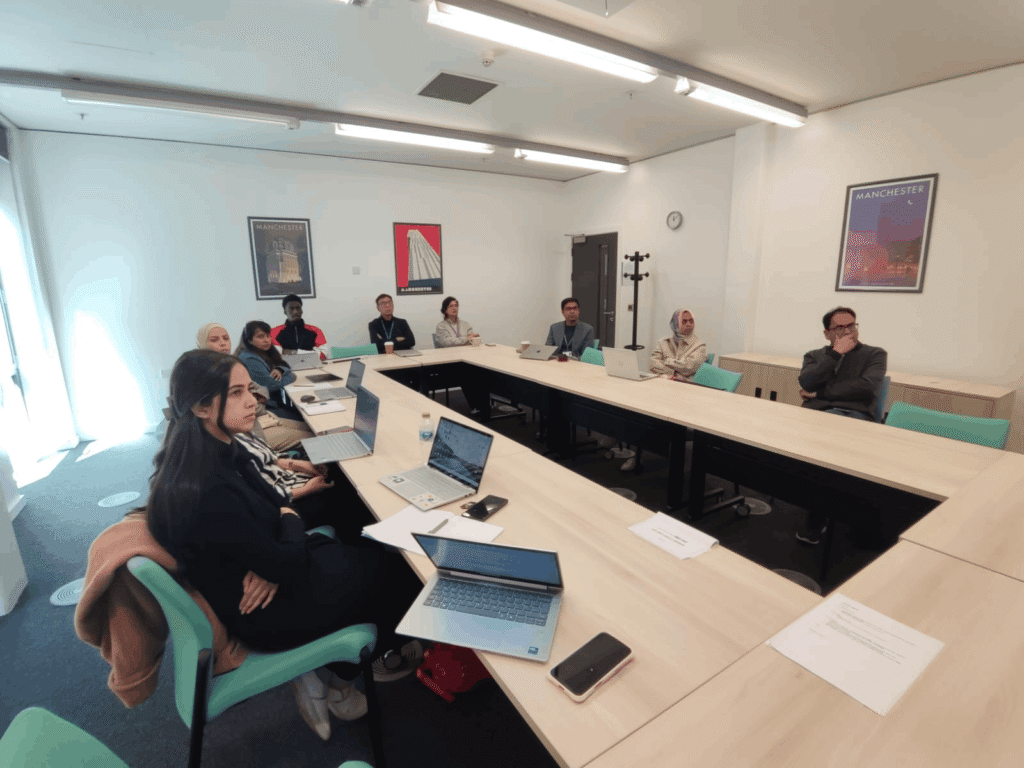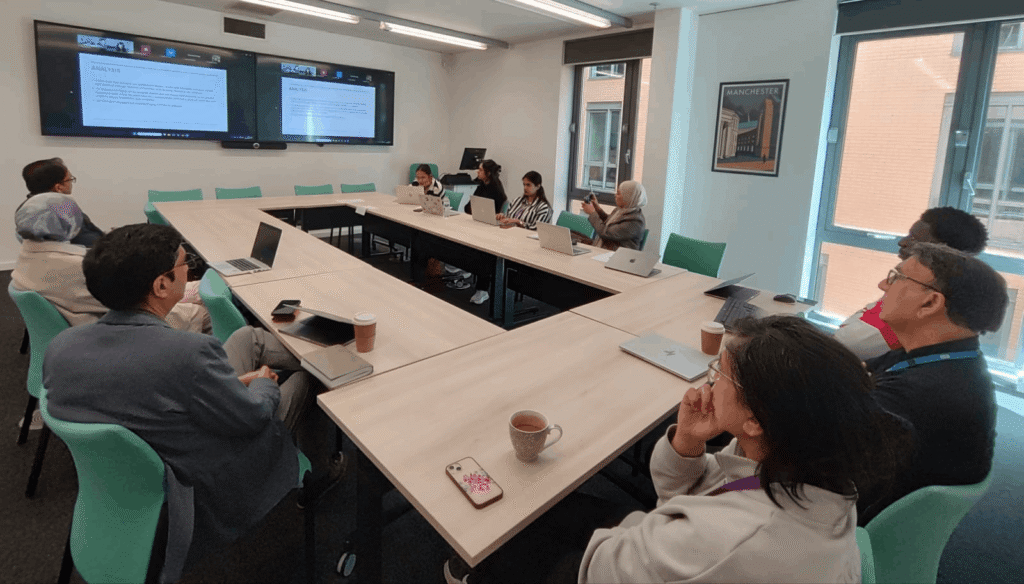
The GMHCP Journal Club hosted an engaging session on 23 April 2026 at the Jean McFarlane Building, The University of Manchester, with participants joining both in person and online.
The session was presented by Aleena Syed, a third-year PhD researcher in the Division of Psychology and Mental Health at The University of Manchester and a qualified Cognitive Behavioural Therapist (PGCert CBT). Prior to her doctoral studies, Aleena completed a Master’s degree in Mental Health Studies, specialising in cultural adaptations. She has over 10 years of research experience, having worked as a Research Assistant, Clinical Studies Officer, and Deputy Trial Manager. Her research has focused on the development and evaluation of culturally adapted psychological interventions for South Asian communities, with an emphasis on improving their accessibility, acceptability, and effectiveness.
Her presentation, “Addressing Parenting Challenges and Depression in British South Asian Mothers with Toddlers: Cultural Adaptations and Intervention Needs,” explored the unique challenges faced by British South Asian mothers and the importance of developing culturally appropriate approaches to support maternal mental health.
Session Summary
The presentation highlighted the complex relationship between parenting challenges and maternal depression among British South Asian mothers with young children. It explored how cultural beliefs, family dynamics, stigma, and barriers to accessing mental health services can influence mothers’ experiences and their willingness to seek support.
Drawing on her research, Aleena emphasised the need for culturally adapted interventions that reflect the lived experiences, values, and preferences of South Asian families. The findings reinforce the importance of designing accessible, culturally sensitive mental health services that can better support maternal wellbeing and improve outcomes for both mothers and their children. We extend our sincere thanks to Aleena Syed for sharing her valuable research and insights. We also thank everyone who attended, both in person and online, for their active participation and contributions, helping to make the session a great success.